
At a Glance
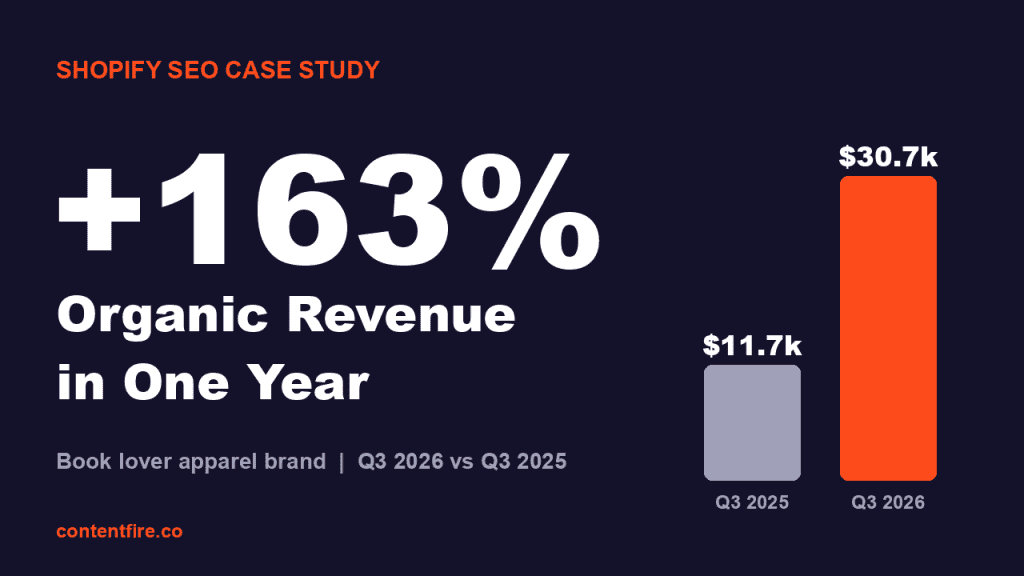
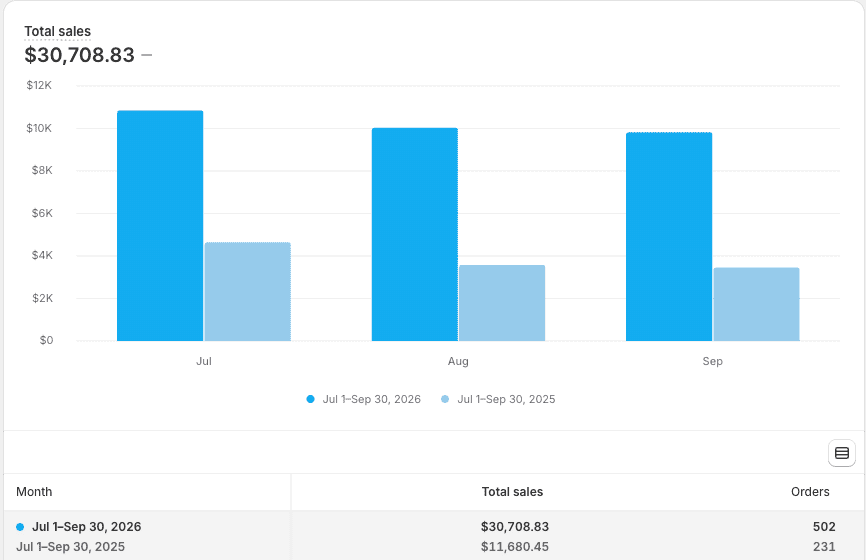
- +163% organic search revenue, Q3 2026 vs Q3 2025 ($11.7k to $30.7k)
- Organic orders more than doubled, from 231 to 502
- Their store as a whole grew 12%, so they grew organic revenue about 13x faster than the business
- 7.6x return on their SEO investment last quarter
The Client
The client is a 7-figure brand that sells apparel and accessories for book lovers: sweatshirts, totes and bags, Kindle cases, bookmarks and more. Most of their sales come from Instagram and Facebook, so Google was never their focus.
They already ranked well for “kindle cases,” their biggest category, but did poorly on the many variations of that search. Their goal was to capture a much bigger share of all those searches.
When we started in September 2025, organic search brought in 2.6% of their revenue, and their site had a Domain Rating of 13 against competitors in the 30s and 40s.
What We Found
Every Collection Page Said the Same Thing
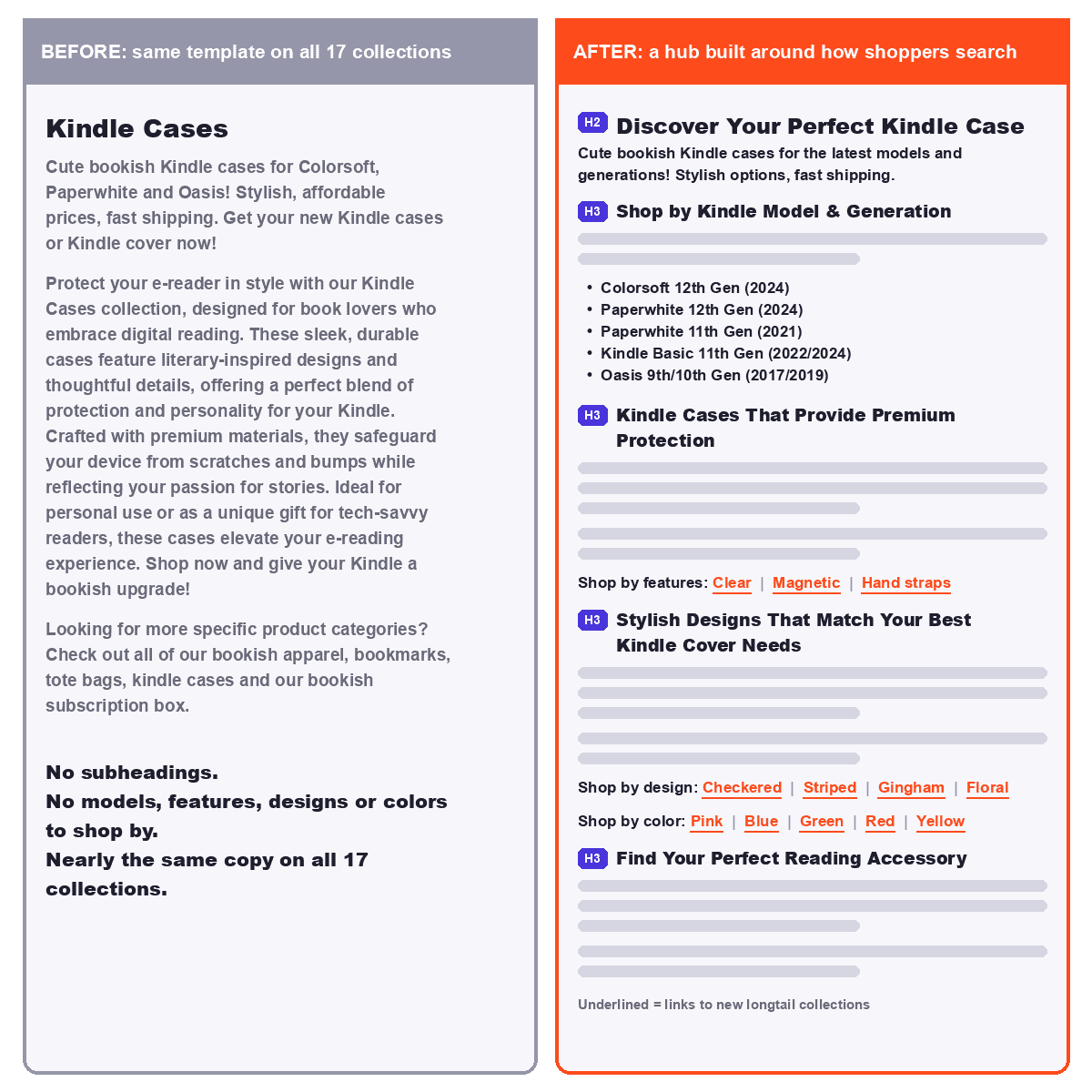
All 17 of their main collections used nearly the same generic paragraph (“crafted with premium materials… perfect for gifting to a fellow bibliophile… shop now!”) with the same block of links at the bottom.
Their Kindle Cases page named only three Kindle models. Google had no reason to rank one page over another, or any of them over a competitor.
No Longtail Pages for What Shoppers Actually Searched
People search for Kindle cases by model, feature, and color (“clear Kindle case,” “Kindle case with hand strap,” “magnetic Kindle case”), plus terms like “book sleeves.”
The store sold those products but had no specific pages built for those searches, only one catchall collection page.
Pages Competing With Each Other
They had three overlapping sweatshirt collections. The main Sweatshirts page got the clicks for “bookish sweatshirt,” while a second collection built for that exact phrase didn’t rank, and a third was a sweaters collection with no sweaters in it.
This is a common occurrence on established stores without a regular SEO to clean up keyword cannibalization.
Index Bloat
Google could index every product variant and paginated collection URL, and the store still used Shopify’s default robots.txt.
Do your collection pages look like this? Book a free call and I’ll show you which pages I’d fix first.
What We Did
Rebuilt Kindle Cases First (September 2025)
We prioritized the highest-value categories with the client, starting with Kindle cases.
We rewrote the main page to turn it into a hub around the models and generations shoppers own, and added “shop by feature, design and color” sections to internally link to each of the 15 new Kindle collections.
Cleaned Up Indexing
We noindexed variant and paginated URLs in the theme and replaced the default robots.txt with a custom one.
Rewrote Every Other Existing Collection
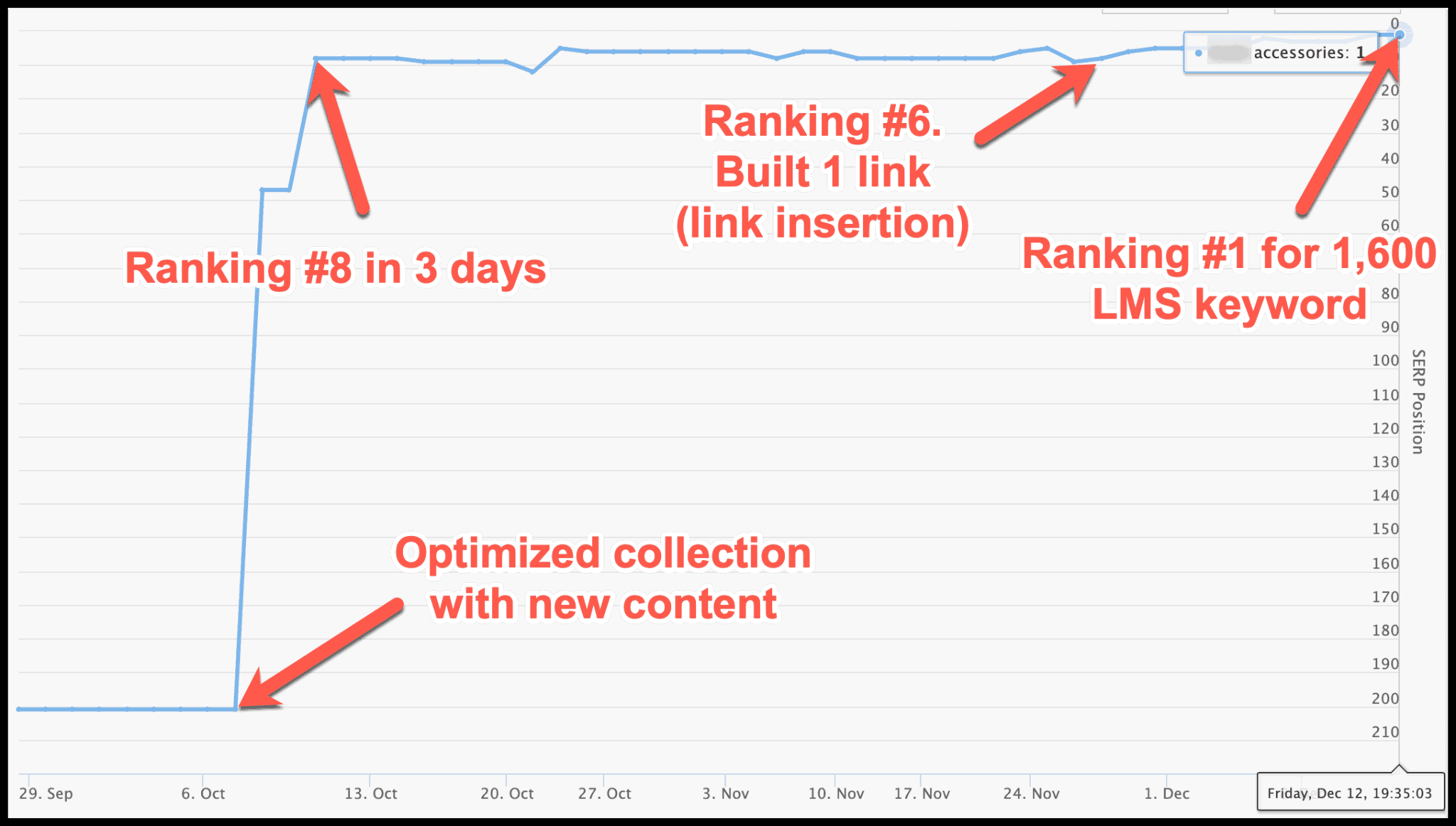
In early October we wrote new keyword-targeted copy for all their existing collection pages, from bags and totes to hats, socks and drinkware. One example: their generic “Goods” collection got no search traffic at all.
We retargeted it at “book accessories,” and by December it ranked #1 for that search and had become one of their top five collections for traffic.
Removed Overlap
We merged the three sweatshirt pages into one with redirects. Later we unpublished six model-specific Kindle collections that the main Kindle page was already outranking.
This can happen when publishing new longtail collections which is why we closely monitor rankings to unpublish any pages that don’t perform.
Kept Expanding (2026)
We added collections for other e-readers and retargeted the phone cases page around “bookish phone cases.”
We then used Search Console data to fix internal links, adding menu and body links to collections that ranked well but had almost no links pointing to them.
Built Authority Consistently
Starting in October 2025, we built 4-8 monthly backlinks totaling more than 50 links in the first year on relevant book and reading sites (Domain Rating 22 to 76, median 42), pointed mostly at the homepage and the top revenue collections (Kindle cases, totes and bags).
The Results
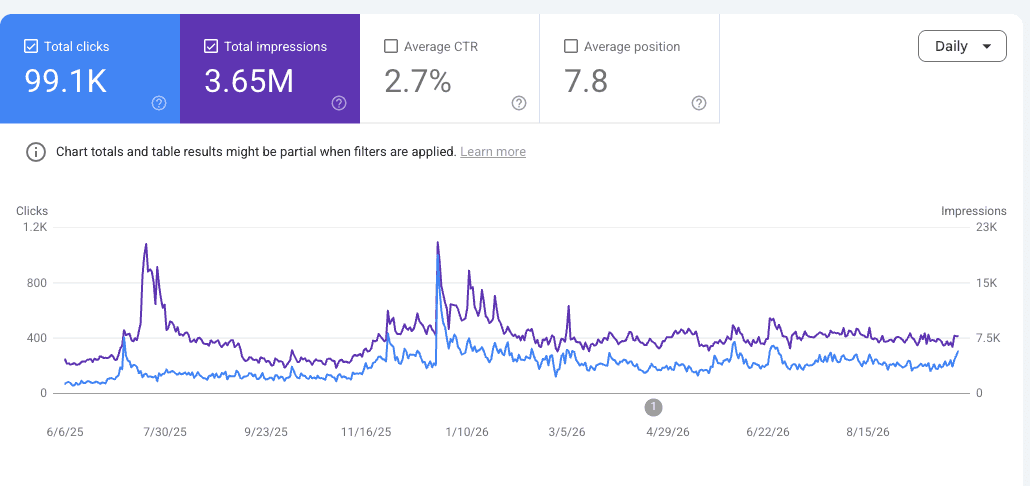
New collections reached Google’s top 30 within days of launch. By January 2026, the brand ranked #1 for “kindle cases,” their biggest category, with top-three rankings for many high-intent variations.
In Q3 2026, shoppers spent $30.7k at the store through organic search, up from $11.7k in Q3 2025. Organic orders went from 231 to 502, and organic search grew from 2.6% to 6.2% of their total revenue.
Over the last six months, they made $48.5k from organic search, up 138% from $20.4k in the same six months a year earlier. Organic orders more than doubled, from 387 to 795.
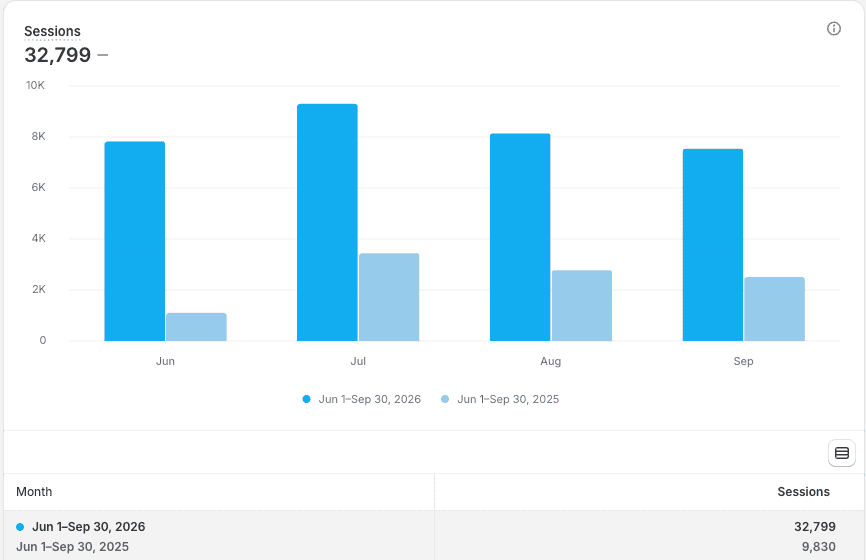
Most of the new shoppers landed on collection pages, as expected and intended. Organic visits to their collections more than tripled year over year.
Those are people searching for a type of product, not for the brand.
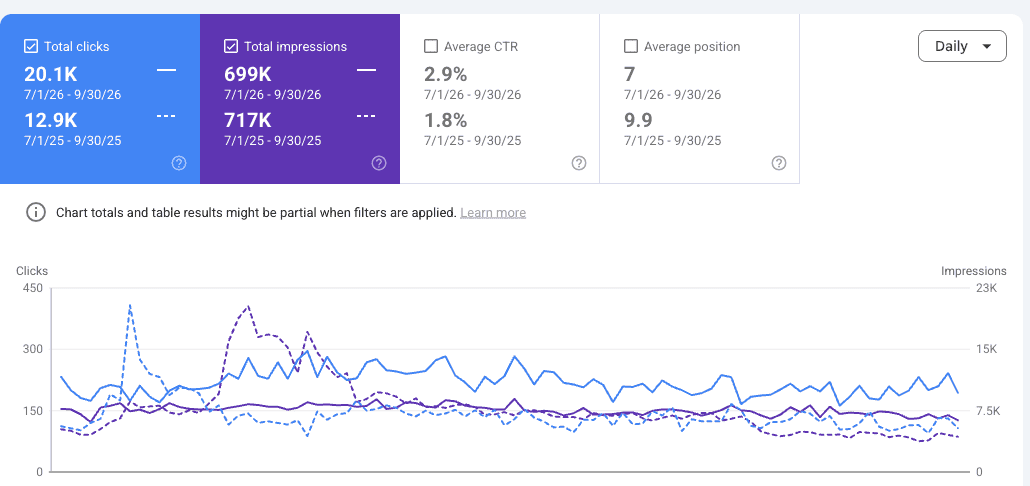
Google traffic grew alongside revenue. Non-branded Google clicks (searches that don’t include the brand name) grew 56% year over year in Q3, from 12.9k to 20.1k, and their average position for those searches improved from 9.9 to 7.
Want results like these for your store? Book a call and I’ll show you what I’d do first.
A Bonus: Shoppers From AI Search
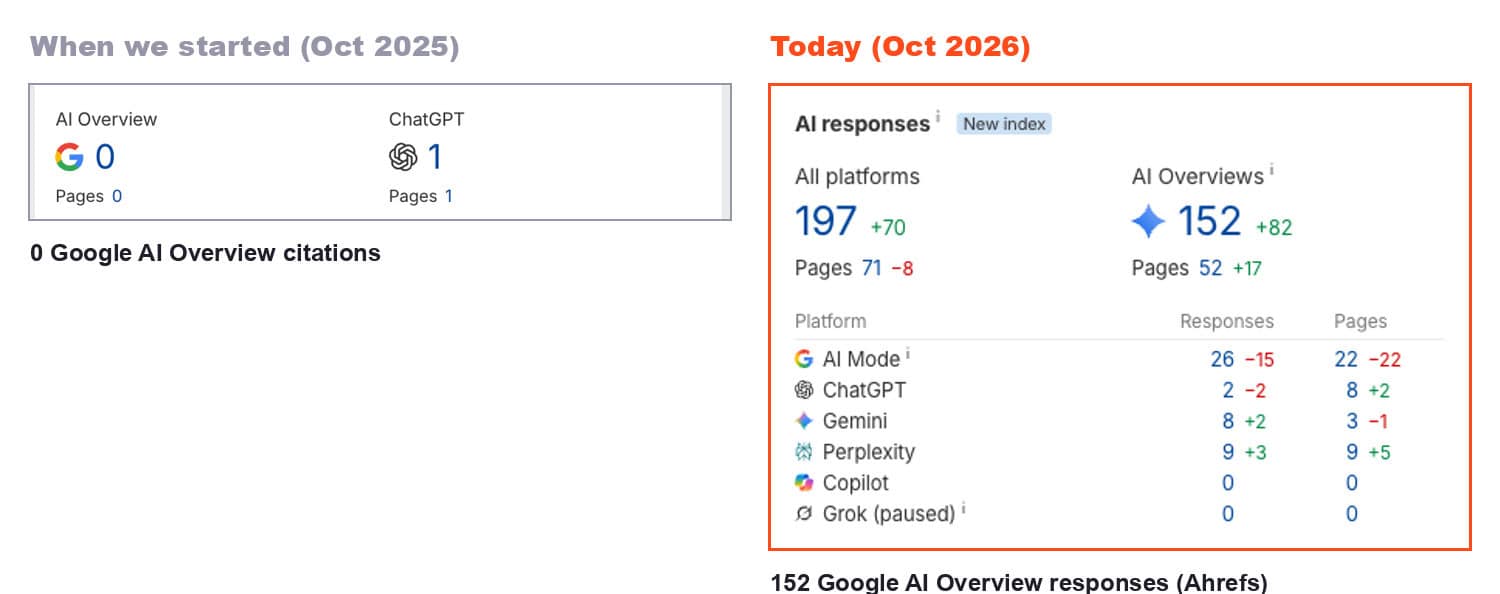
We didn’t do any separate AI optimization. SEO was our only focus. But the same pages that started ranking in Google also started showing up in AI answers.
Since we started, shoppers referred by AI assistants like ChatGPT and Perplexity visited the store 1,285 times, 4.7x the year before, and placed $1.1k in tracked orders, 13x the $85 from the year before.
Google’s AI Overviews tell the same story. Ahrefs found zero AI Overview citations for the store when we started. Today it finds the store in 152 AI Overview answers across 52 pages.
What the Client Said
I’ve had a great experience working with Jake on our SEO and link-building strategy. He’s been extremely professional, knowledgeable, and consistent throughout the entire process. Since working with Jake, I’ve seen a noticeable improvement in our search rankings and overall organic visibility. He clearly understands SEO, knows how to build quality links, and has done a great job focusing on what works for our business specifically. Communication has also been excellent, and he’s been reliable, responsive, and easy to work with. I’m very happy with the progress we’ve made and would absolutely recommend him to anyone looking for someone to handle their SEO and link building.
Results That Compound Over Time
SEO compounds. Over the full 12 months, the brand got about 2x back on their SEO investment.
Last quarter alone, they got a 7.6x ROI on their SEO. Same client, same kind of work; the difference is time.
That’s why we compare against the same quarter last year and against the store itself, so a strong season can’t make the numbers look better than they are.
Could Your Store Do the Same?
If your store already does well with Meta ads and you haven’t put much effort into SEO yet (like this client), you are likely in a great position to see quick growth with Shopify SEO.
Book a call and I’ll show you what I’d do first.
